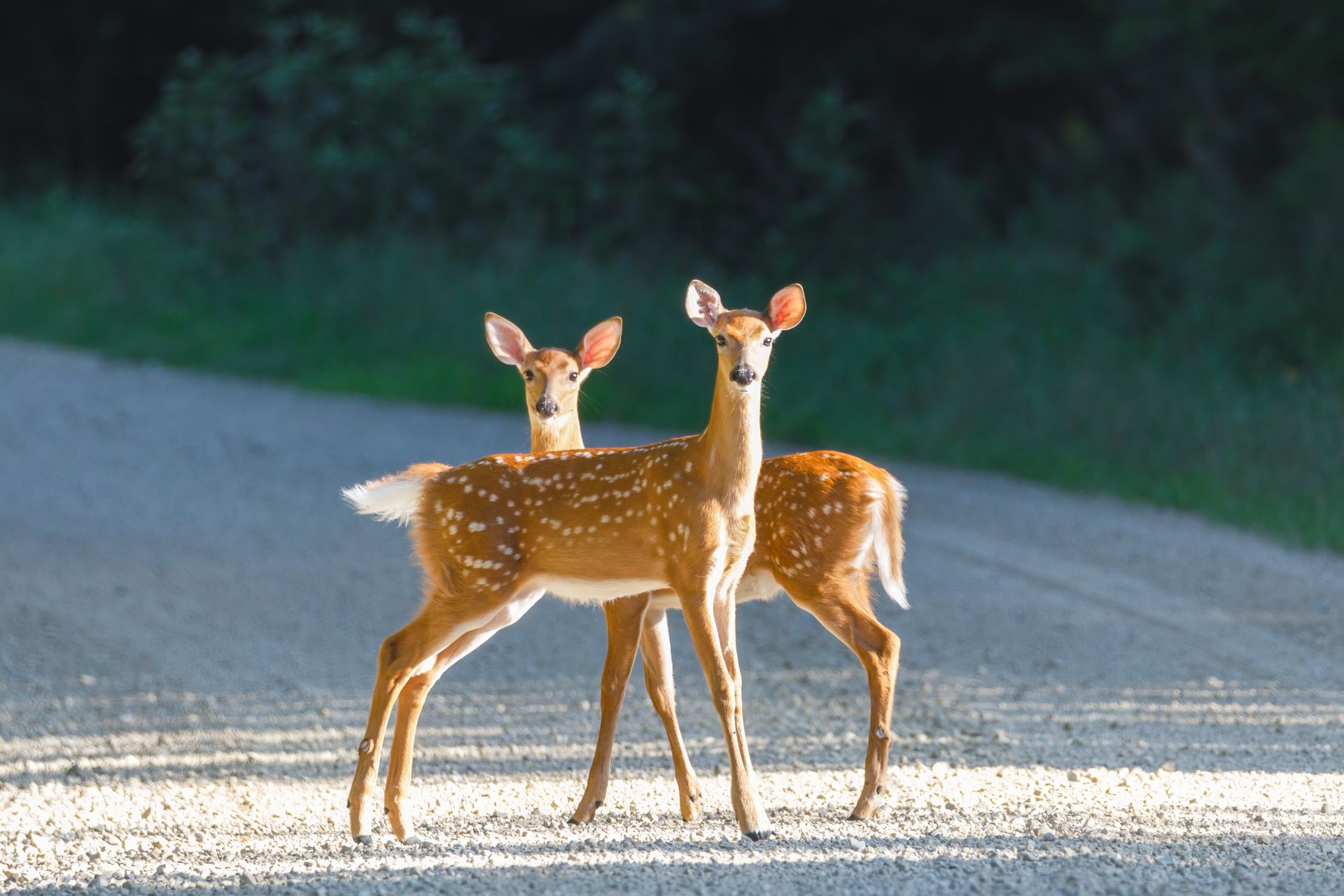
In New Jersey, hitting a deer is usually handled under the comprehensive part of your auto policy, not collision, and comprehensive is optional, so it's worth checking now whether you have it. Deer are most active on our roads from late October through mid-December, so this is the right time to slow down at dusk and take a quick look at your coverage.
I'm Anthony Abbatiello, and I've been helping drivers in Manchester Township, Whiting and the rest of Ocean County with their car insurance for more than 15 years. Every fall I hear the same story from customers: "It came out of nowhere." So here's what I tell people in my office on Route 37.
Why late October matters
According to the New Jersey Department of Environmental Protection and NJ Department of Transportation, peak mating season for white-tailed deer in New Jersey runs from late October to mid-December. During the rut, deer are more likely to dart into the road suddenly, and they move most around early morning and sunset, right when many of us are commuting.
The end of daylight saving time makes it trickier. Once the clocks fall back in early November, more of our drive home happens in the dark, exactly when deer are on the move.
The state's Division of Highway Traffic Safety says there are more than 15,000 deer-vehicle crashes in New Jersey each year, that about half happen from October through December, and that many happen on two-lane roads with no median. If you drive Route 70, Route 539, Lacey Road or the back roads around Whiting and the Pine Barrens, you know just what that looks like.
Driving tips from the state
NJDEP and NJDOT share these tips every fall, and they're good ones.
- Slow down when you see a deer, and watch for sudden movement. If it's standing in the road, wait for it to cross. Don't try to drive around it.
- If you see one deer, assume more are nearby.
- Pay attention to "Deer Crossing" signs and give yourself extra stopping room in those areas.
- Use high beams in the dark when there's no oncoming traffic or car ahead of you. Deer eyes reflect the light.
- Don't tailgate. The driver in front of you might have to stop short for a deer.
- Don't swerve. If a collision looks unavoidable, brake firmly and stay in your lane. The state notes that crashes are more likely to turn deadly when a driver swerves into oncoming traffic or a fixed object.
- Buckle up and put the phone down. New Jersey has a hands-free device law.
If you do hit a deer
First, make sure everyone is okay. Pull over somewhere safe, turn on your hazard lights, and stay away from the animal, since an injured deer can be dangerous. The state asks drivers to report any deer-vehicle collision to local law enforcement, so call the police. Take photos of your car and the scene if it's safe, then contact your insurance company or give me a call and I'll walk you through the next steps.
Comprehensive vs. collision: which one applies?
This is where people get confused, and it matters.
The New Jersey Department of Banking and Insurance (DOBI) explains that comprehensive coverage pays for damage to your vehicle that isn't the result of a collision, such as theft, vandalism, flooding, fire or a broken windshield, and that it also pays if you collide with an animal. Collision coverage is for damage from a collision with another car or object.
So if your car hits a deer, the claim generally falls under comprehensive, subject to your policy's terms and deductible. If you swerve to avoid the deer and hit a guardrail or a tree instead, that's typically a collision claim.
A few other points from DOBI's Auto Insurance Buyer's Guide:
- Comprehensive and collision aren't required by New Jersey law, but your lease or auto loan may require them.
- On the Standard Policy, comprehensive and collision are always available as options. On the Basic Policy, insurers aren't required to offer them.
- You choose a deductible, which is the amount you pay out of pocket on a claim. Higher and lower deductible options are available.
If you dropped comprehensive on an older car a few years ago, or you're not sure which policy type you have, deer season is a good time to look. I'm not saying everyone needs it. It depends on your car, your budget and how much you could comfortably handle out of pocket. But I'd rather you decide now than find out after the fact.
A quick fall policy check
When I do annual reviews with customers in Manchester and around the Jersey Shore, I go over a few things:
- Do you have comprehensive coverage, and what's the deductible?
- Is your deductible still an amount you could pay tomorrow without stress?
- Do you have rental reimbursement or roadside assistance? These may be available as options, subject to terms, conditions and availability.
- Has anything changed, like a new driver, a paid-off loan or a new commute?
Discounts may also be available, subject to terms, conditions and availability, and I'm happy to go through which ones might apply to you.
FAQ
Does car insurance cover hitting a deer in New Jersey?
According to NJ DOBI, comprehensive coverage pays if you collide with an animal. Whether a specific claim is paid depends on your policy's terms, conditions and deductible.
Is comprehensive coverage required in NJ?
Not by state law. A lender or leasing company may require it.
Should I call the police after hitting a deer?
Yes. NJDEP and NJDOT ask drivers to report any deer-vehicle collision to local law enforcement right away.
When is deer season worst on New Jersey roads?
The state says peak mating season runs from late October to mid-December, with the most activity around dawn and dusk.
Let's take a look together
If you'd like a second set of eyes on your auto policy before the clocks change, call me at 732-504-0301, text 732-914-1212, or stop by the office at 1980 Rt 37 W, Suite 7, in Manchester. Walk-ins are welcome. Drive safe out there.
Anthony Abbatiello, Agent for Allstate, Abbatiello Financial Group. Licensed in NJ and PA.
Coverage is subject to policy terms, conditions and availability. Not all discounts apply in every state.
Photo: Aaron J Hill via Pexels